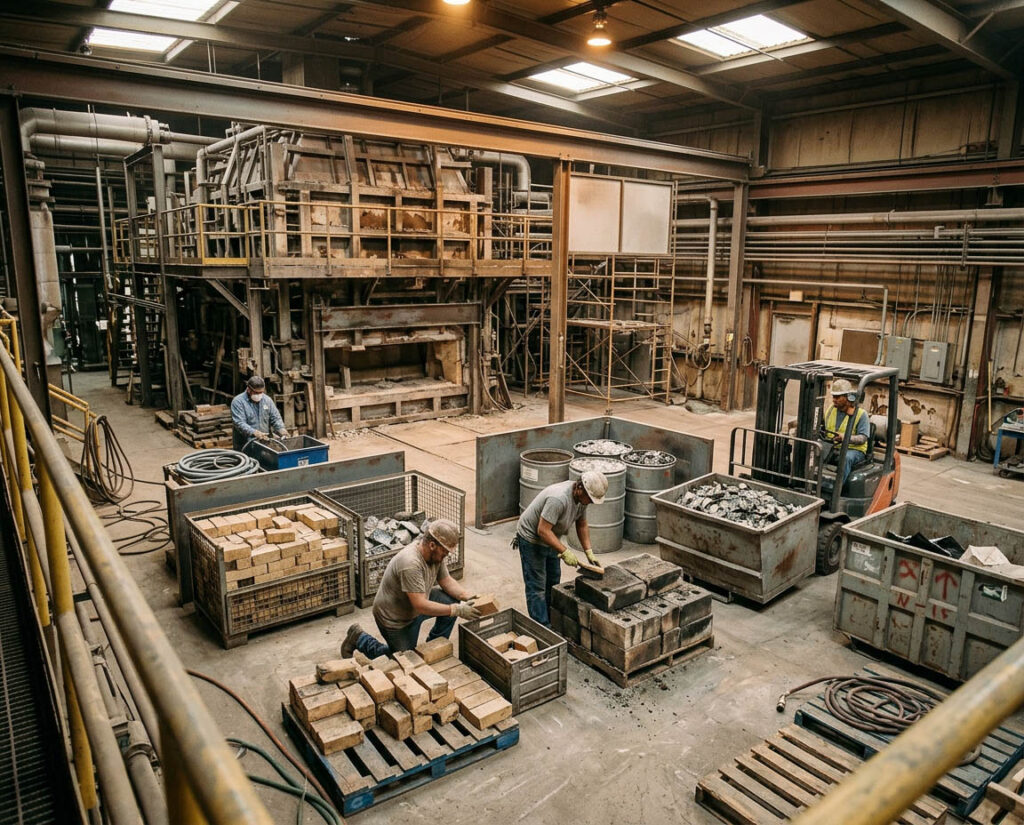
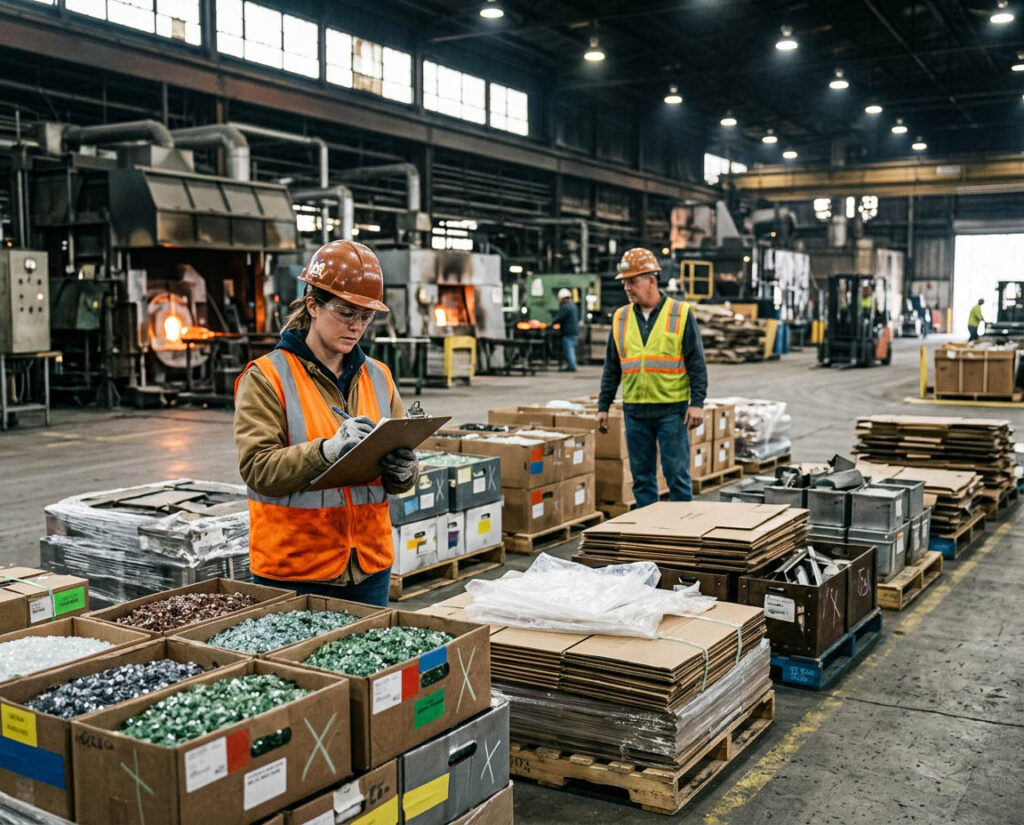
When companies talk about recycling in industrial environments, the language can sound reassuring. Material was “diverted.” Product was “recovered.” Waste was “recycled.” On paper, those phrases can appear simple and positive. But in refractory management, especially in glass furnace environments, those claims only mean something if they are supported by a disciplined process and a legitimate downstream use.
That distinction matters.
In a highly regulated industry, not every movement of material qualifies as meaningful recycling. Not every alternative to landfill is automatically a compliant recovery pathway. And not every optimistic sustainability claim holds up under scrutiny. For plant leadership, environmental teams, and operations personnel, the real question is not whether someone says material was recycled. The real question is whether the material was handled, evaluated, documented, and processed in a way that makes that claim legitimate.
That is the standard SME is built around. Across the company’s service language and positioning, the emphasis is not on optics or inflated diversion claims. It is on beneficial verified reuse, transparent reporting, responsible processing, and defensible material outcomes. SME repeatedly frames its recycling programs around legitimate recovery standards, measurable environmental results, and clear documentation rather than vague sustainability language.
For facilities navigating furnace rebuilds and refractory removal, that is an important difference to understand.
Recycling is not just movement — it is a qualified outcome
In industrial settings, it is easy for the concept of recycling to become oversimplified. Material leaves the plant. A third party takes possession. A truck goes somewhere other than a disposal site. From a distance, that may look like a recycling success.
But from a compliance and operational standpoint, it is not enough.
Legitimate refractory recycling requires more than relocation. It requires a defined and supportable pathway in which the material has actual reuse value, is managed appropriately, and enters a real industrial end-use stream. SME’s own content is very clear on this point. The company distinguishes between true material recovery and simply relocating material without a defined beneficial end use, and it stresses that customers should understand exactly where materials go and how they are processed.
That language is important because it establishes the difference between appearance and substance.
A plant may be told that material was “recycled,” but if there is no defined beneficial use, no clear chain of handling, and no credible documentation of downstream processing, that claim becomes weak very quickly. From an environmental reporting standpoint, that can create risk. From a reputational standpoint, it can create doubt. And from a decision-making standpoint, it can leave plant teams without confidence in what actually happened after the material left the site.
Legitimate recycling is not a vague category. It is a process with requirements.
In refractory environments, legitimacy starts with the material itself
Before material can be routed toward reuse, it has to be understood correctly.
That sounds obvious, but it is one of the most important realities in refractory recycling. Furnace removal generates materials with different compositions, contamination risks, reuse potentials, and handling implications. Chrome-bearing material is not the same as AZS. AZS is not the same as magnesia. Alumina and fire clay may require different evaluation than other specialty compositions. Once those materials are mixed, identifying the right downstream path becomes much harder.
That is why SME’s broader service framework puts so much emphasis on on-site segregation and classification at the point of removal. The company states that trained personnel evaluate refractory types in real time to determine reuse eligibility, recycling potential, and disposal pathways, and that proper refractory handling begins at the point of removal rather than after transport.
This matters because legitimate recycling decisions are only as strong as the field controls behind them.
If materials are segregated correctly, evaluated promptly, and documented with discipline, the facility preserves more recovery options and creates a stronger basis for downstream claims. If materials are mixed indiscriminately, handled without clear classification, or loaded without intentional separation, recovery potential declines and the credibility of any later “recycling” designation becomes much weaker.
So before legitimate recycling is even a downstream issue, it is an upstream handling issue.
What legitimate recycling should include
For plant teams trying to evaluate whether a refractory recycling program is credible, it helps to think in practical terms. Legitimate recycling should not be defined by a sales phrase. It should be visible in the process.
At a practical level, a credible refractory recovery program should include several things.
It should include clear evaluation of the material at the point of removal. That means real field decisions, not assumptions made after mixed loads have already left the site.
It should include segregation that protects reuse potential. If valuable or reusable material is mixed with incompatible debris, the possibility of recovery may disappear before the recycling conversation even begins.
It should include a verified end-use pathway. Material should not simply be stockpiled, held indefinitely, or transferred into a vague chain of custody. There should be an actual downstream industrial use.
It should include documentation and transparent reporting. The facility should be able to understand what was recycled, what was disposed, and why.
It should include honest exclusion of material that does not qualify for reuse. Not every removed material stream will be reusable, and credible programs do not force a recycling claim where one is not justified.
These points are consistent with how SME describes its own programs. The company states that its recycling services are built around transparency, documentation, and measurable environmental outcomes, and that materials not eligible for reuse are directed to approved disposal facilities rather than being represented otherwise.
That last point is especially important. A reliable recycling program is not defined by claiming that everything can be recovered. It is defined by knowing what qualifies, what does not, and how to handle both responsibly.
Why the legitimacy standard matters so much
Some may ask why this distinction is so important. If the material is offsite and no longer at the plant, why spend so much time defining what counts as legitimate recycling?
The answer is that the consequences of weak or unsupported claims do not disappear when the trucks leave.
For one, environmental reporting depends on accurate categorization. If a facility is measuring landfill diversion, recycled tonnage, or broader sustainability performance, the quality of those numbers depends on the quality of the underlying material management decisions. Unsupported recycling claims do not improve reporting. They weaken it.
Second, regulatory scrutiny does not care about marketing language. If questions arise about how materials were handled, whether a recovery pathway was legitimate, or whether material was truly reused versus merely moved, the strength of the answer depends on process and documentation.
Third, internal decision-making improves when plant teams have confidence in what happened. If a facility wants to compare rebuild outcomes, refine handling practices, improve segregation, or better forecast future projects, it needs reporting that reflects reality rather than assumptions.
SME’s service language consistently reinforces this mindset. The company emphasizes documented compliance, transparent material reporting, reduced long-term environmental liability, and environmental claims that are defensible rather than merely attractive on paper.
In other words, legitimacy matters because real outcomes matter.
The role of regulation in defining legitimate reuse
Another reason this topic matters is that legitimate recycling in refractory environments is not just an internal preference. It sits within a real regulatory framework.
SME’s content repeatedly references alignment with federal reuse regulations, the Reuse Legitimacy Rule, and 40 CFR 261 standards. The company states that materials designated for reuse should provide a useful contribution, produce a valuable product, be managed as commodities, and not constitute sham recycling. It also notes that materials identified for reuse are returned to industrial markets as substitutes for virgin raw materials and are not abandoned, land-applied, or routed into inappropriate non-industrial uses.
That framing is valuable because it takes recycling out of the realm of vague promises and puts it into the realm of defined standards.
For plant leadership, that should be reassuring. It means legitimate recovery is not based on whatever sounds good in a proposal or a conversation. It is based on whether the material actually fits a compliant and supportable reuse pathway.
And just as importantly, it means that when a material does not meet that standard, it should be managed accordingly. A disciplined company does not blur that line. It respects it.
Real recycling is built on transparency, not assumptions
One of the strongest themes throughout SME’s site content is transparency. That should not be treated as a branding phrase alone. In this industry, transparency is operationally useful.
Transparent recycling means the facility understands the difference between recovered and disposed material. It means the handling logic can be explained. It means reported outcomes correspond to actual processes. It means sustainability language is tied to something concrete. It also means the service provider is willing to communicate clearly when disposal is the proper path rather than stretching the meaning of recycling to make the numbers look better.
This is one of the clearest ways to tell whether a recycling approach is trustworthy.
If a provider speaks in broad, optimistic generalities but avoids specifics about segregation, end use, reporting, or regulatory alignment, plant teams should ask more questions. If the process is real, those answers should exist.
SME’s own approach is to avoid making claims it cannot document and to provide clarity about how and where material is processed. That is exactly the kind of posture facilities should look for in a recycling partner.
Why this matters during furnace rebuild planning
Legitimate recycling is often discussed after removal begins, but the best time to think about it is before the outage starts.
Furnace rebuild planning already involves complex coordination around labor, timing, safety, logistics, and plant operations. Material management should be part of that planning from the beginning. If the goal is to maximize appropriate reuse while protecting compliance, then field execution, segregation strategy, transportation planning, and documentation expectations all need to be aligned early.
SME’s site content reflects this by describing recycling as something integrated directly into rebuild planning rather than added after the fact. The company positions recycling strategy as part of the overall furnace rebuild process, with the intent to preserve reuse potential while maintaining compliance discipline.
That planning mindset can influence the entire project.
When teams plan for segregation early, more recovery options may remain available. When they define documentation expectations in advance, reporting becomes more meaningful. When they establish realistic criteria for reuse and disposal before material starts moving, the project is less likely to drift into ambiguity later.
What plant teams should ask when evaluating a recycling approach
For facilities reviewing a refractory recycling program, a few practical questions can help separate a real process from a vague one.
What happens at the point of removal?
How are different material streams evaluated and separated?
What determines whether a material qualifies for reuse?
What is the actual downstream end use?
How is recycled material distinguished from disposed material in reporting?
What happens to material that does not qualify for recovery?
Those questions are not confrontational. They are necessary. The answers reveal whether the process is disciplined, supportable, and aligned with the standards the facility should care about.
The strongest programs will not treat those questions as obstacles. They will treat them as part of doing the work correctly.
Closing thought
Legitimate refractory recycling is not defined by a label. It is defined by process, standards, transparency, and actual end use.
For glass manufacturers, that means recycling should never be evaluated only by whether material avoided a landfill on paper. It should be evaluated by whether the material was segregated correctly, assessed honestly, routed through a verified beneficial use pathway, and documented in a way that supports both compliance and credibility.
That is what real recycling looks like in practice.
And in a technical, highly regulated environment, that is the only standard worth using.