In industrial projects, reporting is often treated like the last step. Material is removed, trucks leave the site, invoices are processed, and then a summary is assembled to close the loop. But in refractory management and recycling, the quality of that final report is only as strong as the process behind it. If material was not segregated carefully, documented accurately, and tracked with discipline from the beginning, the report at the end may be neat on paper but weak in substance.
That is why material disposition reporting matters more than many facilities realize.
For glass manufacturers operating in a technical, highly regulated environment, material disposition reporting is not simply a clerical exercise. It is a tool for visibility, accountability, and decision-making. It helps plant teams understand what was recycled, what was disposed, why those determinations were made, and how those outcomes connect back to compliance, sustainability, and operational planning. SME’s own site content identifies material disposition reporting as a distinct recycling capability and defines it as documented tracking and reporting of recycled versus disposed material volumes for environmental transparency.
That language is worth paying attention to, because it points to something larger. Good reporting does not just tell a facility what happened. It helps a facility understand whether the work was performed in a way that supports defensible environmental outcomes.
Reporting gives plant teams something they often do not have enough of: clarity
In many industrial projects, material movement happens quickly. Decisions are made in real time. Crews are focused on access, schedule, safety, and removal efficiency. Under those conditions, it is easy for documentation to become secondary. The assumption is often that enough information can be pulled together later.
Sometimes it can. Often it cannot.
Without structured reporting, plant leadership may only have a general sense of outcomes. Material went offsite, but how much was actually reused? What percentage was directed to disposal? Were certain streams preserved well enough to support recovery? Were others mixed or contaminated in a way that reduced options? If a facility wants to answer those questions with confidence, it needs more than a broad summary. It needs reporting tied to a disciplined field process.
That is one reason SME positions transparent material reporting as part of its overall value proposition. The company’s content repeatedly stresses that it does not make claims it cannot document, that it communicates honestly when disposal is required, and that it focuses on measurable outcomes rather than optics.
For clients, that creates real value. It replaces assumptions with evidence.
Good disposition reporting starts long before the final document
One of the biggest misunderstandings around reporting is the idea that it begins after the work is done. In reality, disposition reporting begins at the point of removal.
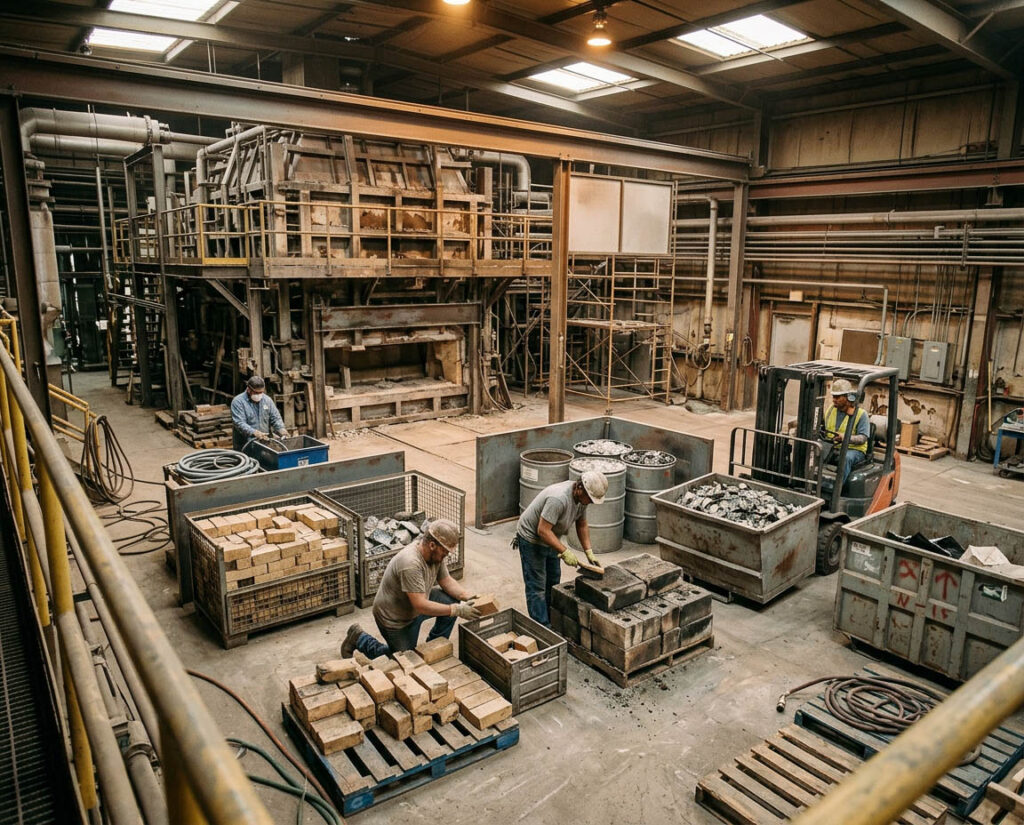
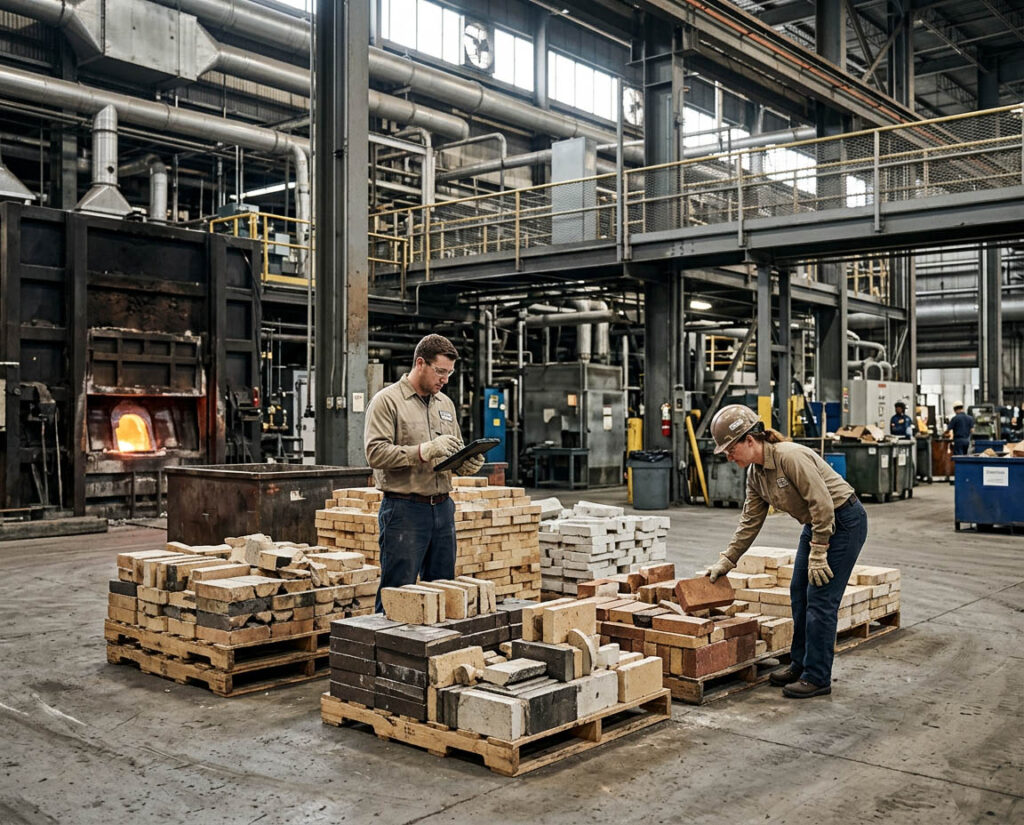
If materials are classified in real time, segregated correctly, and tracked through handling and transportation, the final reporting becomes far more meaningful. If materials are mixed indiscriminately, evaluated late, or moved without enough documentation, the reporting process becomes more interpretive and less reliable.
This is why SME’s broader service model ties reporting directly to field execution. Across the site language, the company emphasizes on-site segregation, classification, compliance control, and structured material tracking as essential parts of responsible refractory management. It also notes that proper refractory handling begins at the point of removal, where trained personnel determine reuse eligibility, recycling potential, and disposal pathways in real time.
That connection between field handling and final reporting is critical.
A clean report is only useful if it reflects a clean process. Otherwise, it risks becoming a polished version of uncertainty.
Why recycled-versus-disposed reporting matters
One of the most practical benefits of material disposition reporting is that it separates recycled volumes from disposed volumes in a way that helps plant teams evaluate actual performance.
That separation matters for several reasons.
First, it supports environmental transparency. If a facility claims to be reducing landfill dependence or improving material recovery outcomes, it should be able to show what was truly recycled and what required disposal. SME’s recycling page specifically identifies reduced landfill dependency, transparent material reporting, improved sustainability metrics, and reduced long-term environmental liability as major client benefits.
Second, it supports credible sustainability communication. Sustainability claims are much stronger when they are connected to actual quantities, actual pathways, and documented decisions. If a facility is measuring performance over time, broad statements are not enough. It needs trackable outcomes.
Third, it supports better internal review. When leadership can see how material was managed on a given project, it becomes easier to evaluate what worked, where recovery opportunities were preserved, and where handling could improve on the next outage.
Fourth, it supports compliance confidence. A report that clearly distinguishes reuse-qualified materials from disposal-bound materials gives environmental teams a better foundation for recordkeeping, review, and communication.
Put simply, recycled-versus-disposed reporting is not just data collection. It is a way of turning project activity into something the facility can understand and use.
Transparency matters more in regulated environments
In a highly regulated sector like glass manufacturing, transparency is not a branding luxury. It is part of responsible operations.
Glass plants deal with materials, timelines, safety conditions, and environmental obligations that leave very little room for vague explanations. If a question comes up later about how refractory was handled, what happened to a particular material stream, or why certain quantities were managed one way rather than another, a transparent disposition report can help answer those questions with clarity.
SME’s site content makes this exact point in several ways. The company frames its services around regulatory integrity, documented compliance, and defensible recovery claims. It also states that materials not eligible for reuse are properly directed to approved disposal facilities and that environmental claims should be documented and supportable.
That is what real transparency looks like in practice.
It does not mean every project is simple. It means the record of what happened is honest, structured, and specific enough to stand up to review.
Reporting helps prevent sustainability from becoming a vague talking point
A lot of companies want stronger sustainability narratives, and for good reason. Customers, internal leadership, and stakeholders increasingly expect industrial operations to show measurable environmental responsibility. But in technical environments, those narratives have to be grounded in actual project outcomes.
This is where material disposition reporting becomes especially valuable.
If a facility wants to talk about waste reduction, landfill diversion, beneficial reuse, or carbon-related impacts, it needs to know what really happened to the material. Not what was hoped for. Not what sounded possible. What actually happened.
SME’s content reflects that mindset. The company repeatedly ties sustainability to real recovery pathways, documented outcomes, and practical reuse where it provides a legitimate environmental benefit. It also notes in its Project Carbon Tracking language that material without reuse value should be disposed of responsibly rather than stockpiled, and that stockpiled material should not be counted as recycled.
That is an important standard. It reinforces the idea that reporting should reveal reality, not decorate it.
For plant teams, that means better reporting does more than populate a spreadsheet. It helps separate measurable sustainability progress from unsupported assumptions.
Better reporting improves future outage planning
One of the strongest operational advantages of material disposition reporting is that it creates a better feedback loop for future planning.
Furnace rebuilds and major outage events are not isolated forever. Plants learn from them. Teams refine how they stage work, handle materials, allocate labor, and coordinate vendors. Material reporting should be part of that learning process.
If a facility can review a previous project and see where recovery rates were strong, where disposal volumes increased, where segregation protected reuse potential, or where documentation could have been stronger, that information becomes useful planning intelligence. It helps improve the next project before the next project starts.
This lines up with SME’s long-term positioning throughout the site. The company consistently describes refractory management decisions as having implications for long-term rebuild cycles, environmental reporting, risk mitigation, and operational performance over time.
That long-view perspective is important. Good reporting does not just explain the past. It can improve the future.
Disposition reporting also strengthens client-provider trust
There is another benefit to transparent reporting that is easy to overlook: it improves trust.
When a facility works with a specialized partner, confidence depends on more than field performance. It also depends on whether the client can clearly understand what was done and how outcomes were determined. Reporting is one of the clearest ways that trust is either strengthened or weakened.
If the reporting is vague, generalized, or overly polished without enough substance, the client may feel that important details are being glossed over. If the reporting is clear, structured, and honest about both recovery and disposal, it shows that the provider is approaching the work responsibly.
SME’s content repeatedly underscores this trust-based philosophy. The company says it operates as an extension of the client’s team, prioritizes transparency and communication, and makes decisions as if the risk were its own.
Disposition reporting is one of the most tangible ways to demonstrate that mindset.
What better reporting should include
For facilities looking to strengthen their own expectations around reporting, it helps to define what “better” actually means.
At a practical level, stronger material disposition reporting should include:
Clear distinction between recycled and disposed volumes
Documentation tied to actual field handling and segregation
Enough specificity to explain why material followed a particular path
Consistency from project to project so results can be compared over time
Honest treatment of materials that did not qualify for reuse
Reporting that supports both environmental review and operational planning
It should also be understandable.
A good report should not require a facility to decode what happened. It should help leadership, plant operations, and environmental teams see the outcome clearly enough to act on it.
Why this topic belongs in the Insights section
Tom’s stated plan for the website is not just to display service information, but to create useful content he can send directly to prospects and clients as part of his outreach. That makes a topic like this especially valuable. It speaks to a real client concern, reinforces SME’s differentiators, and gives the company a practical article link that feels informative rather than promotional. The uploaded call transcript makes clear that the site’s post structure is intended to support exactly that kind of ongoing sendable content.
This article also fits directly within the topics outlined for the Insights section, which specifically include environmental reporting and sustainability metrics, risk mitigation strategies in material handling, and practical field-driven guidance for a technical, regulated audience.
So as a demo post, it does double duty: it shows the site structure working, and it demonstrates the type of content SME can use to support relationships after launch.
Closing thought
Material disposition reporting is easy to think of as an administrative closeout item. In reality, it is one of the clearest expressions of whether a project was managed with discipline, transparency, and accountability.
When reporting clearly distinguishes recycled from disposed material, ties outcomes back to actual field decisions, and supports both compliance confidence and sustainability communication, it becomes much more than paperwork. It becomes a strategic asset.
For facilities navigating refractory removal, recycling, and rebuild planning, that kind of clarity matters.
And in an industry where environmental claims, operational risk, and long-term trust all matter, better reporting is not extra. It is essential.