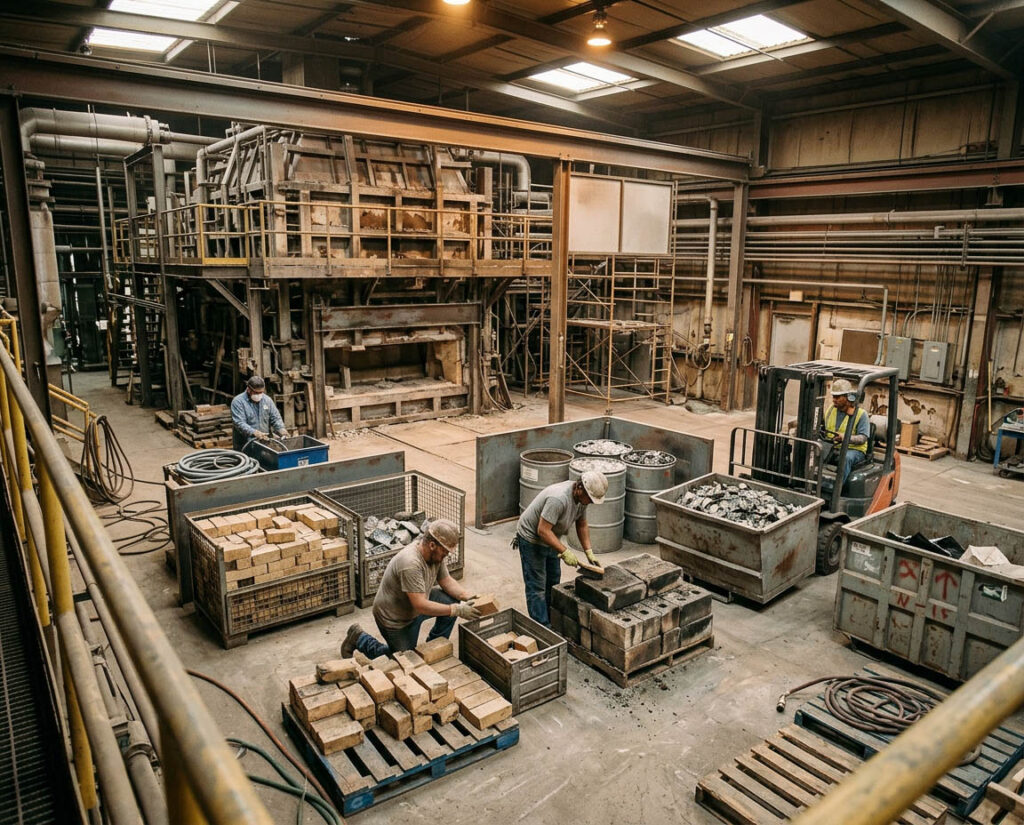
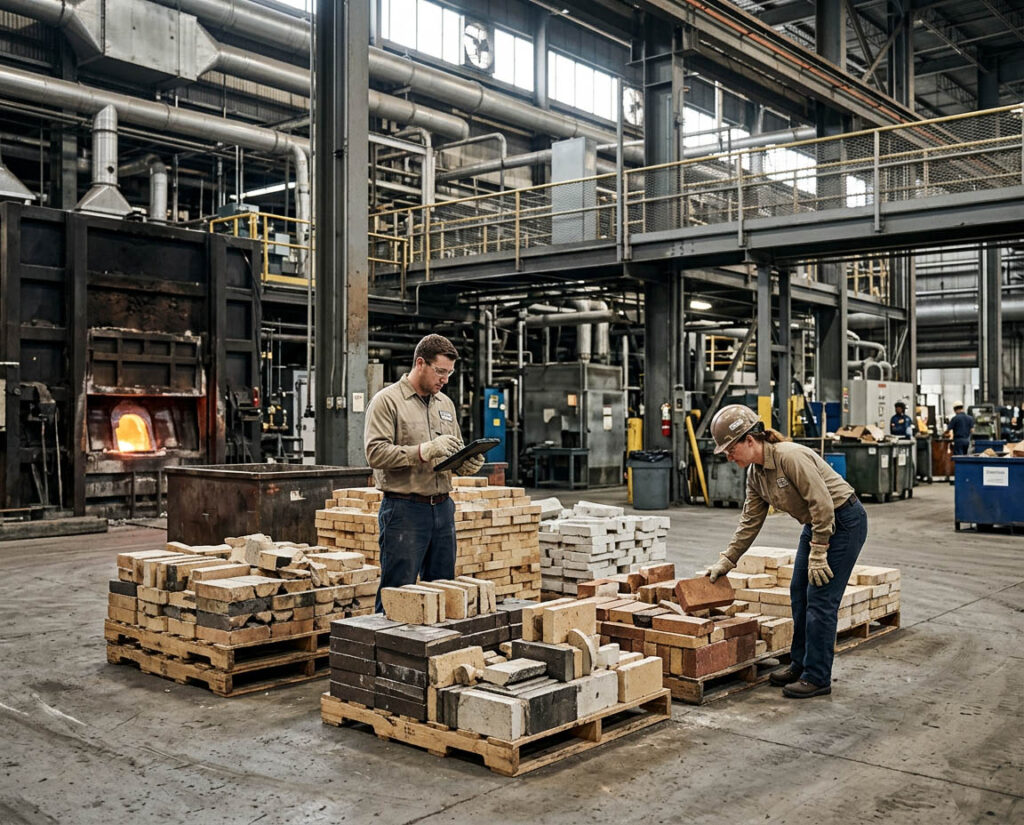
When people think about risk during a furnace outage, they often think first about schedule, contractor coordination, safety incidents, or restart timing. Those are real concerns. But another major source of risk runs through nearly every part of the project: material handling.
How materials are removed, segregated, staged, documented, transported, and ultimately directed toward reuse or disposal has implications that reach well beyond logistics. These decisions can influence regulatory exposure, worker safety conditions, reporting credibility, landfill dependency, recovery opportunities, and even how the next outage is planned.
That is why better material handling should be viewed as a risk reduction strategy, not just an execution detail.
Risk begins when materials start moving
One reason material handling is so important is that risk does not begin after disposition decisions are made. It begins as soon as materials leave the furnace.
At that point, a chain of handling decisions starts to form. Materials may be separated carefully or mixed too early. They may be staged with intent or handled in a way that reduces traceability. They may be evaluated in real time or left for downstream assumptions. Each of those decisions shapes what becomes possible later.
If materials are managed with discipline, plants preserve options and create a stronger basis for reuse, reporting, and compliance. If they are handled reactively, the project may still move forward, but with more uncertainty and fewer defensible outcomes.
That is why point-of-removal control matters so much.
Material segregation is a major risk control
Segregation is one of the clearest examples of how material handling affects overall project risk.
If different refractory types and associated debris are mixed together too early, the facility may lose recovery opportunities, create more conservative disposal outcomes, and complicate downstream reporting. If materials are separated correctly, the project has a much better chance of preserving reuse potential and maintaining a clear record of how different streams were managed.
That is not just operationally useful. It is a direct form of risk mitigation.
Compliance risk often grows from simple field mistakes
Many compliance problems do not begin with complex legal questions. They begin with poor field controls.
A mixed pile. An undocumented load. A missed classification step. A material stream assumed to be reusable without enough support. A disposal decision made after traceability has already weakened. These are the kinds of issues that can turn manageable projects into more complicated ones.
That kind of structure matters because it moves compliance from a back-end review task into the field where many of the real decisions are made.
Better handling improves recovery outcomes too
Risk reduction is not only about avoiding problems. It is also about preserving value.
When materials are handled correctly, facilities often maintain more recovery options. High-value refractory streams are easier to evaluate. Reuse eligibility is easier to support. Reporting becomes clearer. Sustainability claims become more credible.
That means better material handling does more than reduce downside risk. It also improves the quality of the project outcome.
Reporting quality depends on handling quality
Material disposition reporting is only as good as the field process behind it.
If materials are mixed, poorly tracked, or evaluated too late, the final report may lack the precision needed to support strong internal review or environmental communication. If handling is disciplined from the outset, reporting can show clearer recycled-versus-disposed volumes and provide a more useful record of how decisions were made.
That reporting value begins with handling discipline, not after-the-fact summary writing.
Plants should treat material handling as part of outage strategy
One of the biggest mindset changes a plant can make is to stop viewing material handling as a secondary logistics function and start viewing it as part of outage strategy.
That means planning in advance for segregation, classification, reporting, transportation, recovery criteria, and disposal pathways. It means understanding where risk is most likely to develop. And it means choosing processes that preserve clarity rather than create ambiguity.
When plants treat material handling strategically, they position themselves to manage both project demands and downstream consequences more effectively.
Closing thought
During a furnace outage, material handling affects far more than where removed material ends up. It influences compliance, safety, recovery potential, reporting clarity, and the facility’s ability to defend its environmental decisions over time.
Plants that treat material handling as a strategic control are usually better positioned to reduce avoidable risk, preserve more options, and produce stronger overall project outcomes.
In that sense, better material handling is not just good operations. It is smart risk management.